
RX Entry Type A
Automatic hopper feeding: the first step toward labor saving
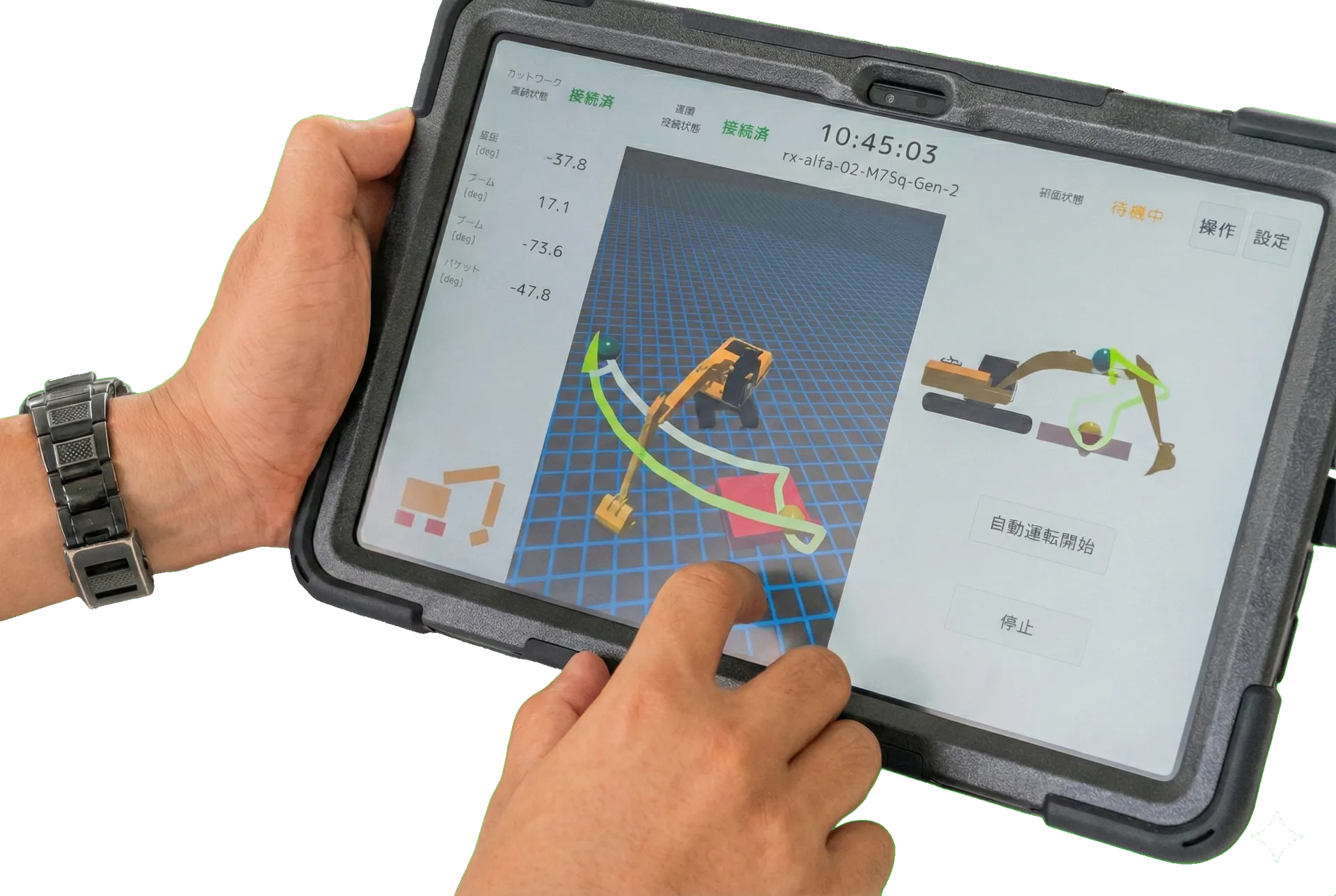
Equipped with Yoisho-Tonyu-kun, ARAV's automatic hopper feeding function, it automates feeding into hoppers and crushers. The machine repeats the dig, swing, dump and return cycle on its own, so a small crew can keep a plant running continuously. A tablet and one dome camera provide a simple setup for monitoring autonomous work and stepping in manually when needed.
Automate feeding and run your site with fewer people
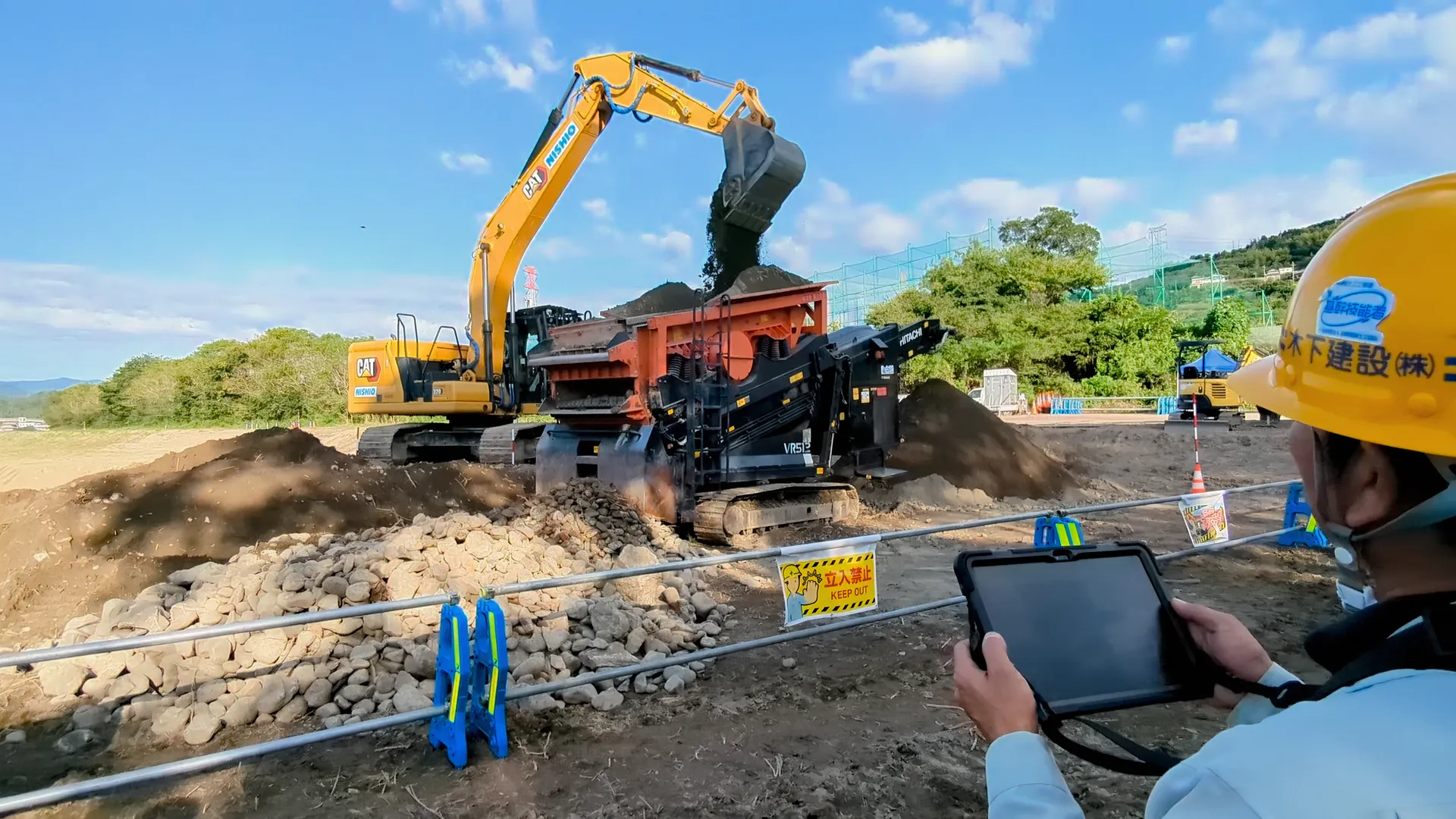
Yoisho-Tonyu-kun handles repetitive feeding automatically. The operator only needs to supervise, so a small crew can sustain steady, continuous operation. It suits a wide range of feeding sites, from river dredging and screening to quarry crushers.
Automatic hopper feeding (Yoisho-Tonyu-kun)
Automates feeding into hoppers and crushers. The dig, swing, dump and return cycle repeats on its own, and the operator focuses on supervision.
Supervise autonomy from a tablet
Monitor autonomous work on a tablet using the dome camera feed, and intervene manually only when something is wrong. Easy to learn without special training.
Many kinds of feeding work
Automates river dredging and screening, primary crusher feeding at quarries, concrete rubble screening and soil stabilization hoppers.
Small start
All you need at the machine is 4G LTE/5G coverage, so you can start saving labor with automatic feeding on a limited initial investment.
LiDAR-based autonomy
for repetitive work
The retrofit autonomous system takes over repetitive tasks such as hopper feeding and dump truck loading. LiDAR scans the dig area, so the machine keeps finding material in the pile. It helps with labor shortages and keeps people out of the machine's working area.
* Reference value from ARAV's test site (0.7 m³ bucket class, feeding task). Actual values vary with the machine, site conditions and settings.
Autonomy
Yoisho-Tonyu-kun (automatic hopper feeding)
Automates feeding soil and rock into hoppers and crushers. After the dig area and the hopper position are registered, the machine repeats the dig, swing, dump and return cycle on its own. The operator becomes a supervisor who monitors the autonomous work and steps in manually only when something is wrong. It can be used for river dredging and screening, primary crusher feeding at quarries, concrete rubble screening, soil stabilization hoppers and more.
- Automatic dig, swing, dump and return cycle
- River dredging with screening
- Quarry primary crusher feeding
- Self-propelled soil stabilization hoppers
Cameras
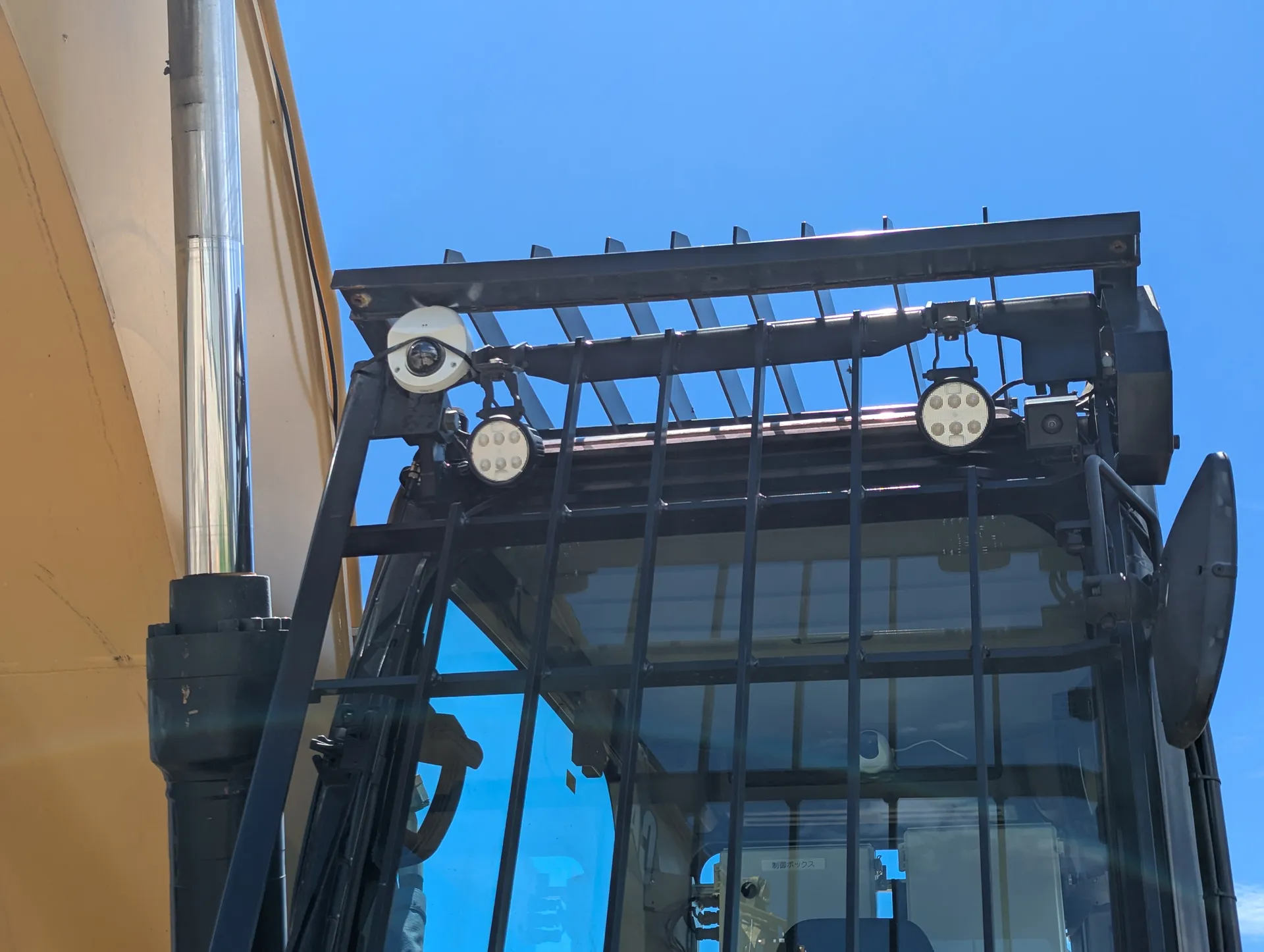
One dome camera, kept simple
A single dome camera on the front of the cab gives the operator the view they need. 720p/30fps video is shown on the tablet in real time with 0.6 s latency, enough to see the bucket position and the surroundings.
- Front dome camera on the cab (720p/30fps)
- Video latency approx. 0.6 s
- Real-time video on the tablet
* Video latency and resolution are reference values measured in ARAV's test environment (recommended network, low load). They vary with the network type, signal conditions and site load.
Controls
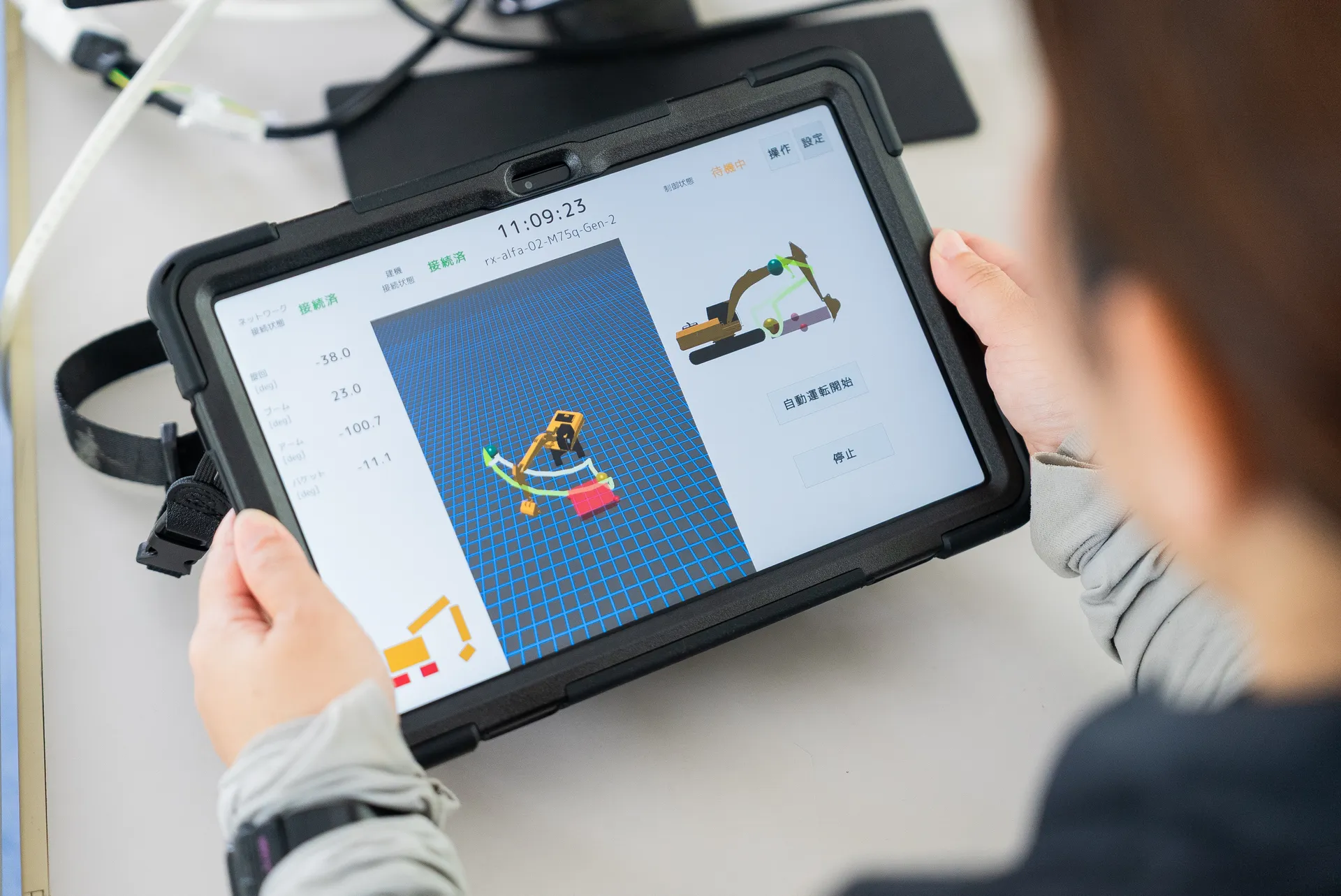
Tablet-only operation
A simple setup where the machine is operated from a tablet while watching the video. Control latency is approx. 0.06 s, so there is practically no perceptible lag. Combined with automatic hopper feeding, a small crew can run the site efficiently.
- Operation and video monitoring on a tablet
- Control latency approx. 0.06 s
- Works together with automatic hopper feeding
* Control latency is a reference value measured in ARAV's test environment (recommended network, low load). It varies with the network type, signal conditions and device performance.
Connectivity
Cloud connection (up to approx. 1,000 km)
A cloud connection over the machine's 4G LTE/5G link allows remote operation from up to approx. 1,000 km away. There is no need to set up a cabin near the machine; work can be done from a safe office. A fail-safe brings the machine to a safe stop if communication is lost. RX Entry Type A is a small-start model dedicated to cloud connection, so on-premises (closed network) connection is not supported. For sites that require a closed network, consider RX Pro.
- Cloud connection
- 4G LTE / 5G required at the machine
- Remote operation from up to approx. 1,000 km
- Fail-safe stop on loss of communication
- On-premises (closed network) connection not supported
System components
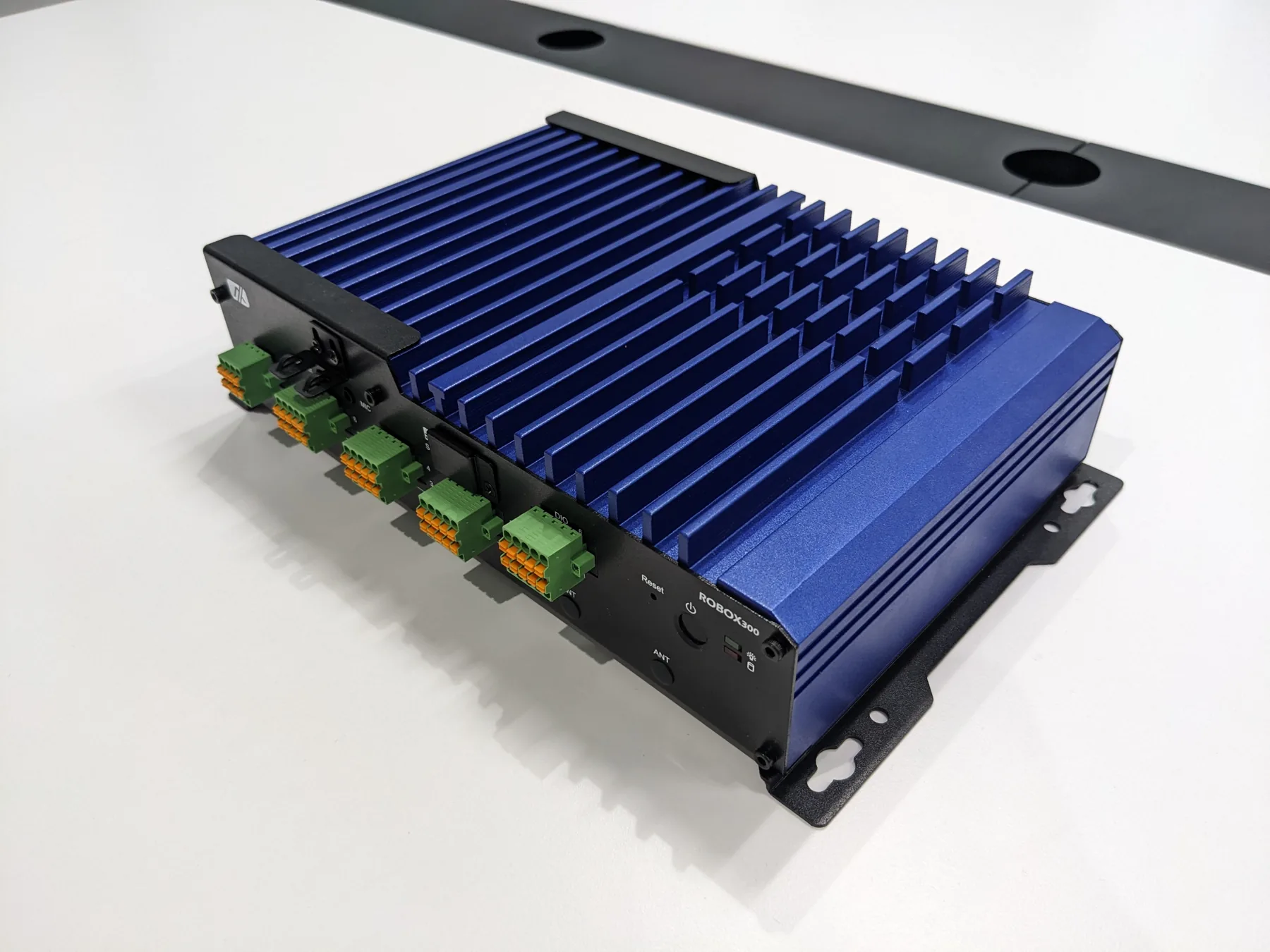
- Industrial PC: runs the autonomous-operation control software
- LiDAR: 3D sensing of the surroundings
- IMU: measures attitude and acceleration
- Encoder: measures the swing angle
SAFETY SYSTEM
Two independent stop systems
Remote and autonomous operation need safety mechanisms that react immediately to lost communication or anything unexpected. The RX series has two independent stop systems so the machine can always be brought to a stop.
Radio emergency stop
A dedicated radio link, separate from Wi-Fi and LTE
The site supervisor carries a handheld emergency stop unit that sends the stop signal over a dedicated low-power radio link. The handheld unit is used within line of sight of the machine. Because it is completely independent of Wi-Fi, LTE and other networks, the emergency stop works even when the network fails.
0.15s*
Response time to stop
Two-way
Communication
- Independent of the network — works during network outages
- Hydraulic lock can be engaged from the handheld unit
- Automatic stop if the machine leaves the handheld unit's range
- The handheld unit must be kept within line of sight of the machine
In Japan, the unit uses the 429 MHz / 920 MHz specified low-power radio bands. Radio regulations differ by country, so please ask us about use in your country.
Automatic stop on network faults
Communication between devices is monitored continuously
The link between the operator's device and the machine is monitored in real time. If the system detects rising latency, packet loss or other faults, it brings the machine to a safe stop automatically, before the operator even notices.
2s*
From fault detection to stop decision
Always on
Monitoring
- Stop thresholds can be customized
- Secure communication with authenticated, encrypted MQTT
- Mesh Wi-Fi plus fiber, Starlink or 5G
Status visible on site
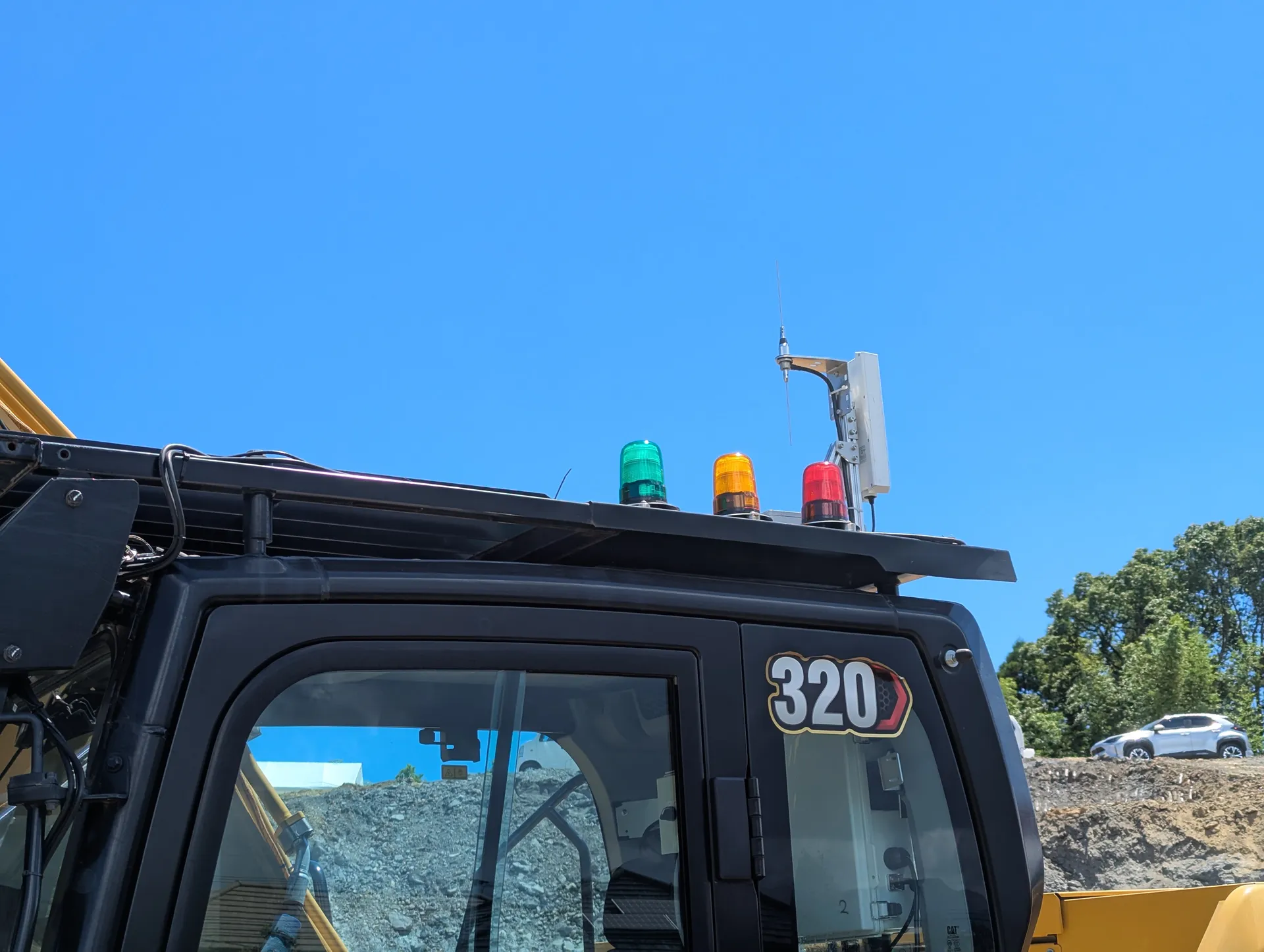
The machine carries a beacon light (red, yellow, green) that shows workers nearby whether it is running autonomously, on standby or stopped because of a fault. IP radios are used for voice communication on site, so the site supervisor and the person managing autonomous operation can talk at all times.
* Response and fault-detection times are reference values from ARAV's test environment and vary with the network, site load and settings. Operating the RX series requires the customer to ensure site safety, including work zoning, supervision and emergency stop arrangements. See the Safety page for details.
Use cases
Where this package is typically used
* The sites shown are typical examples of how the RX series is used. Each deployment is decided with the customer after reviewing site conditions, tasks and the safety management setup, on the premise that the customer is responsible for site safety.
Surplus soil yard
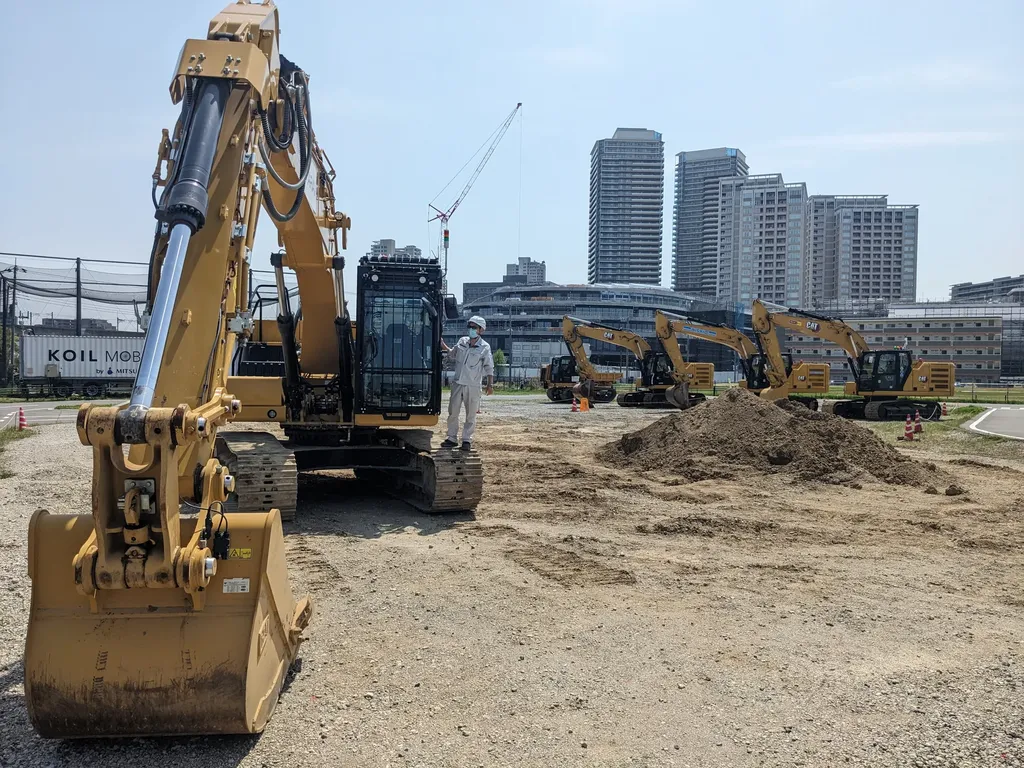
Remote operation with visual checks at a surplus soil yard on your own premises, combined with automatic hopper feeding for efficient work.
River dredging with screening
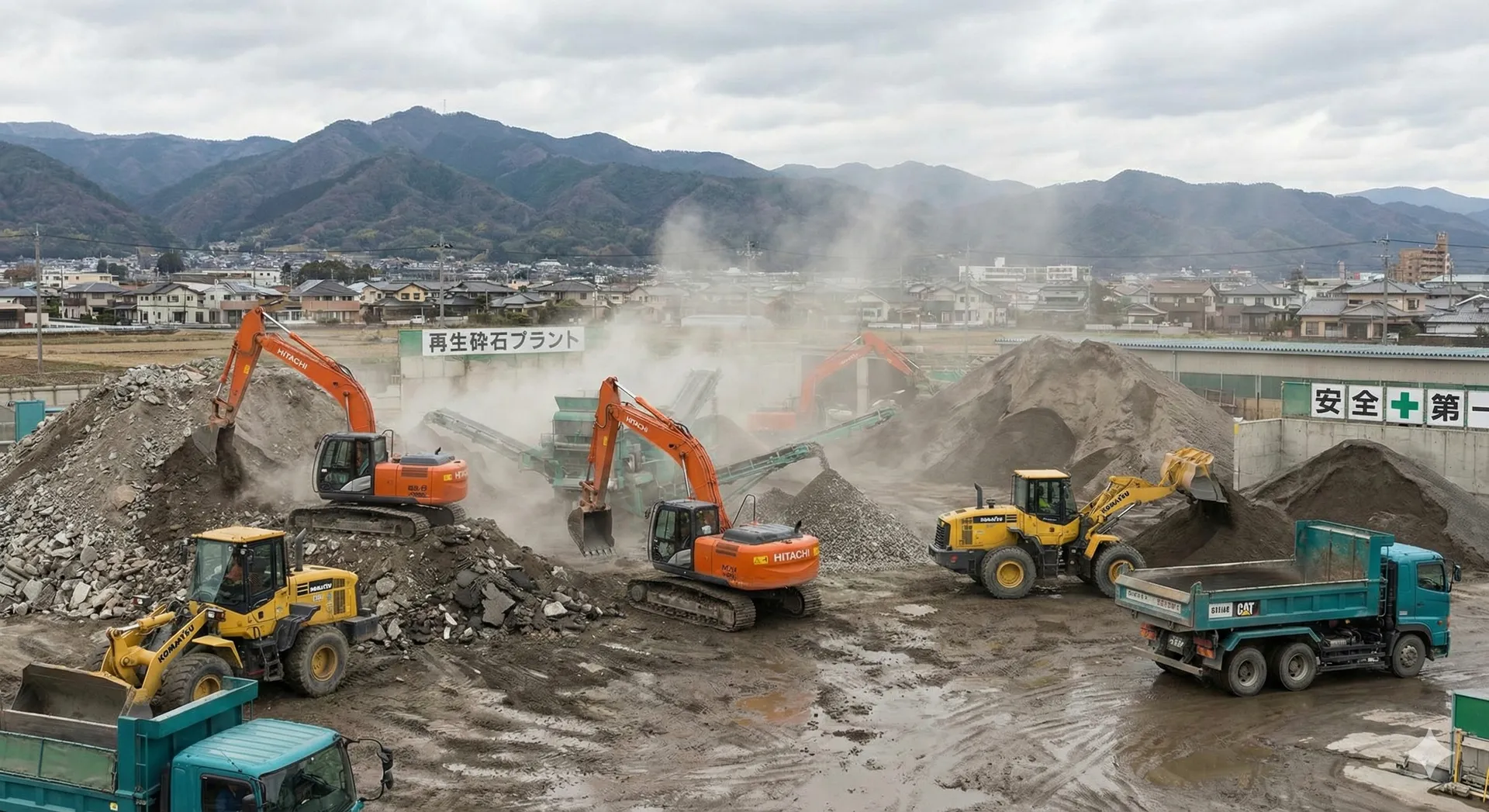
Excavating river sediment and feeding it into a screening plant for grading. Combined with automatic hopper feeding, a small crew can keep the plant running continuously.
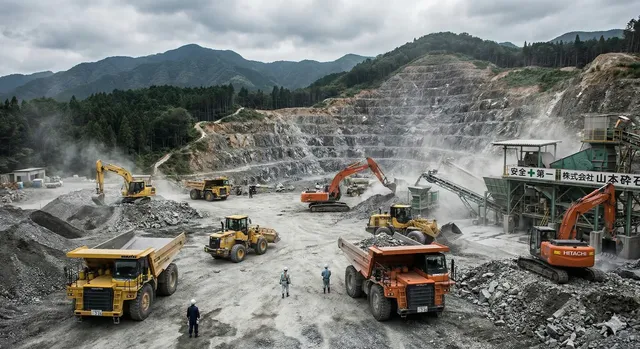
Quarry primary crusher feeding
Feeding raw rock into the primary crusher at an aggregate quarry. Automating this heavy, hazardous task keeps the crusher fed steadily with fewer people.
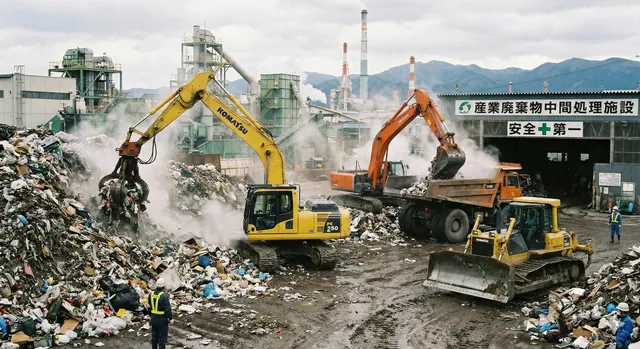
Concrete rubble screening
Screening crushed concrete. The operator stays in a safe place away from the dust while automatic feeding keeps throughput stable.
Soil stabilization plant
Feeding the hopper of a self-propelled soil stabilization (mixing) plant. The automatic cycle holds a steady feed rate with a small crew.
Features by package
Compare RX Entry Type A with the other packages
| Feature | RX Entry Type R | RX Entry Type A | RX Standard | RX Pro |
|---|---|---|---|---|
| Teleoperation: typical sites | ||||
| Surplus soil yards | ||||
| Disaster recovery works | - | |||
| Erosion-control (sabo) dam works | - | |||
| Tunnel construction | - | - | - | |
| Dam construction | - | - | - | |
| Controls (latency approx. 0.06 s) | ||||
| Tablet | ||||
| Game controller | - | |||
| Joystick | - | |||
| Operator station | - | - | - | |
| Cameras | ||||
| In-cab GMSL camera (720p/30fps, 0.3 s) | - | |||
| Front dome camera (720p/30fps, 0.6 s) | ||||
| Overhead PTZ cloud camera (1080p/30fps, 0.6 s) | - | |||
| Site requirements | ||||
| 4G LTE / 5G coverage at the machine | - | |||
| Clear line of sight between machine and relay (approx. 20 m) | - | - | - | |
| Site cabin to serve as the base station | - | - | - | |
| Fiber or satellite link at the base station | - | - | - | |
| Machine control (ICT) | ||||
| 2D/3D machine guidance (MG) | - | - | *1 | *1 |
| 2D/3D machine control (MC) | - | - | - | *1 |
| Safety for autonomous operation | ||||
| Virtual wall | - | *1 | *1 | *1 |
| Automatic lever-pattern recognition | - | *1 | *1 | *1 |
| Real-time obstacle detection with LiDAR | - | - | *1 | *1 |
| Connectivity and range | ||||
| Cloud connection (up to approx. 1,000 km) | ||||
| On-premises connection (closed network) | - | - | - | |
| Automatic feeding: typical sites | ||||
| River dredging with screening | - | |||
| Quarry primary crusher feeding | - | |||
| Concrete rubble screening | - | |||
| Soil stabilization (self-propelled mixer hopper) | - | |||
| Automatic loading: targets | ||||
| On-site crawler carriers | - | - | *1 | *1 |
| On-site dump trucks | - | - | *1 | *1 |
| Road-going dump trucks | - | - | *1 | *1 |
| Automatic excavation from BIM/CIM design data | ||||
| Standard bucket | - | - | - | *2 |
| Tiltrotator | - | - | - | *2 |
| OPERA integration | ||||
| UDP / CAN API | - | - | - | *2 |
*1 Planned for 2026
*2 Planned for 2027
* This list may change without notice as development progresses and product specifications are revised.
How a deployment works
We review your site conditions, existing machines, communication environment and operating setup, then agree on the equipment specification, installation scope and the schedule to start of operation. If needed, we run a demonstration on a test machine. Depending on the conditions, demonstrations may be charged separately.
The system is installed at ARAV's assembly workshop or on site. It is a retrofit that does not touch the hydraulic system, so the machine can be returned to its original state. An in-house inspection checks the sensors, communication and safety functions.
After installation, we sign a purchase agreement for the equipment (remote-operation or automation unit) and a subscription agreement (monthly or annual) for the remote/autonomous operation application. Price, payment terms and maintenance scope follow what was agreed in the consultation.
The equipped machine is delivered and operation begins. The first year includes periodic maintenance support and operator training. Maintenance from the second year is agreed based on the operating record. After reviewing operating conditions and the site setup, we may not be able to accept every project.
These steps describe how projects run in Japan. For sites outside Japan, installation, operator training and maintenance arrangements are discussed with each customer before the project starts.
Considering RX Entry Type A?
Tell us about your machines and site, and we will get back to you by email.